The Great Machapuchhre Trail
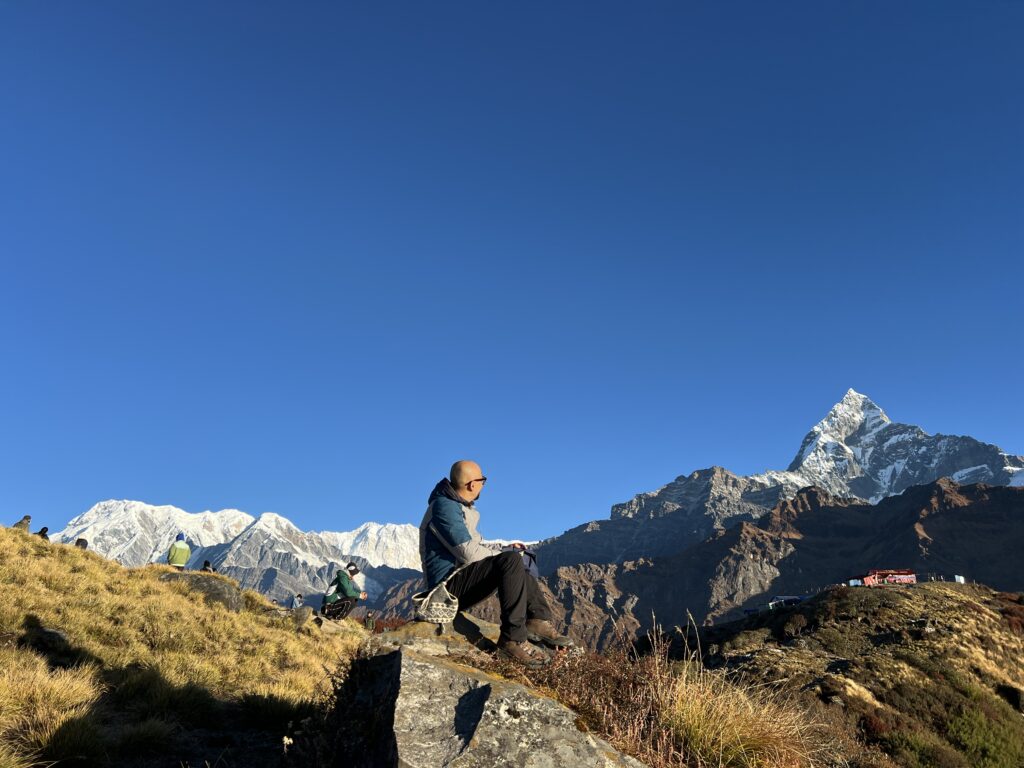
Pokhara wakes slowly, the way a lover turns over in bed, reluctant to leave the dream. At four in the morning the city is wrapped in a silence so complete it has weight, a hush that presses against the eardrums and makes the heart beat louder. The mighty Annapurna Mountains, cloaked in dawn’s shadow, stand as silent guardians over the sleeping city. Hours earlier the same streets had thrummed with neon and music Kuma Sagar’s voice curling through the smoke of bars, pleading ab jaane bhae jau, eh maya ab dherai na satau (“अब जाने भए जाउ, ए माया अब धेरै न सताउ”), but now the musical band are asleep, the lovers gone, the only sound the soft click of a shutter somewhere as a drunk tourist tries to photograph the dark.
I did not want to be the one to break that spell. So we slipped into the taxi without a word, the driver yawning as he turned toward Harichowk. Harichowk, where trekkers gather for vehicle to different trekking destinations. One tea shop had opened its shutter; we ordered milk tea and boiled eggs. A few jeeps sat outside, headlights off, waiting. While we ate, a couple more trekkers wandered in sleepy eyed, friendly nods and wouldn’t you know it, they were headed to the Great Machapuchhre Trail too. By the time we climbed into the jeep there were six of us strangers an hour ago, bound now for the same ridge.
Phewa Taalko Aanganma Lai Lai Machhapuchhre Chhaya, Jivan Mero Seti Bagar Bina Timro Maya (फेवा तालको आँगनमा लै लै माछापुच्छ्रे छाया, जीवन मेरो सेती बगर बिना तिम्रो माया). I have listened to Prakash Shrestha’s immortal voice hundreds of times. But this time I don’t want to see the shadows of Machhapuchhre Mountain in Phewa Lake; I want the desire to see the mountain’s smile from its lap. I want to smile together and greet good morning.
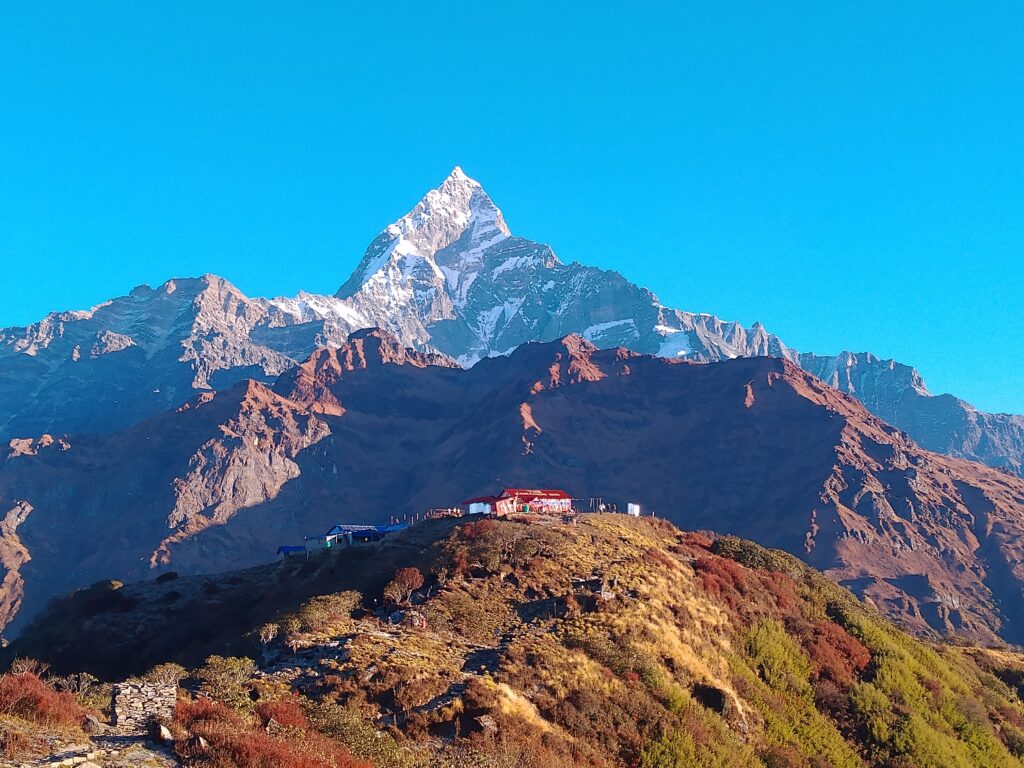
The road to Saripakha took forty-five minutes. Boots hit dirt at six sharp. The air was cool and clean. In Nepal, trekking season you start alone at your door, but by the time you reach the trailhead, you’ve got a crew. Strangers yesterday, teammates today, all chasing the same ridge line.
The trail began with a polite climb, nothing cruel, just enough to remind the body it was alive. Then it flattened toward Tubu Hill. The sign promised ninety minutes; we covered it in forty-five, lungs burning, and laughter spilling out with every breath.
A quiet man had been matching our pace since the start. I asked him about the trail. He said, “Up to Hilekharka the trail is easy, then not a cup of tea for anyone.” At the summit he introduced himself as the owner of Tubu Tea and Camping, the only roof for miles, and waved us inside like cousins come home. Machapuchhre Mountain rose behind the teahouse, its fishtail summit catching the sun, sharp enough to cut the sky. We sat on the grass with cups of tea steaming in our hands. If you carry a notebook on a mountain, the mountain will fill it for you.
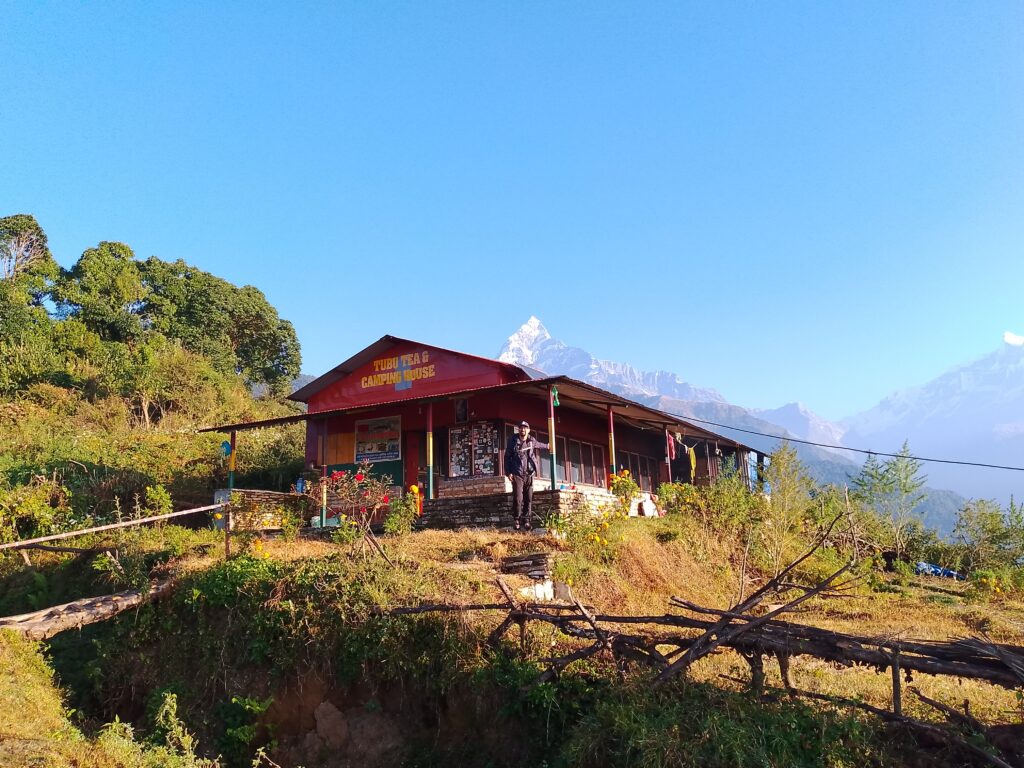
From Tubu to Hilekharka the path climbed without mercy, taking sips of water from the bottle, we carried. At nine o’clock we stumbled into the meadow at Hilekharka, legs trembling, stomachs hollow.
Pawan and I decided to have lunch here. “Dai, lunch for two?” he asked the tea house owner.
Festival season, and there are huge trekkers every day, and the owner who was exhausted from cooking for a large crowd the previous night and again early that morning replied wearily, “It’s barely nine.”
“Tibetan bread, curry, and tea,” we said. He nodded, grateful for the compromise. While the bread puffed on the griddle we unpacked our dry fruits, chocolate, biscuits and laid them on the table like a potluck. A group of women in Gurung dresses posed for photographs nearby. I asked if they’d take one with us. They did better: they taught us a dance for TikTok, laughter louder than the wind.
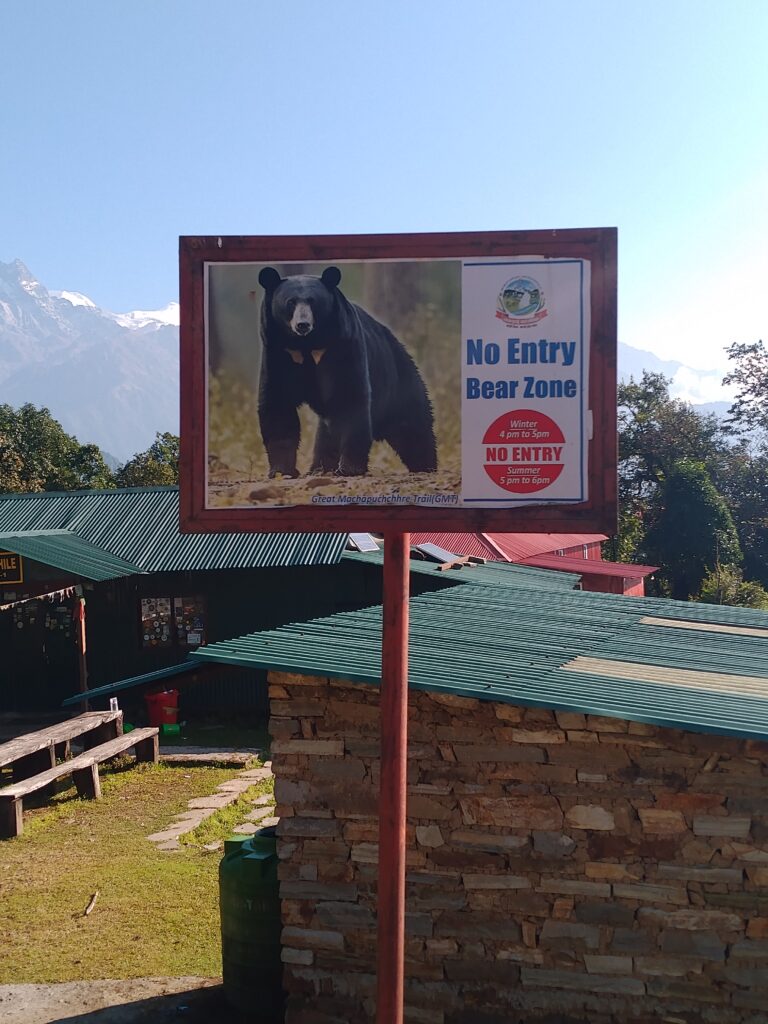
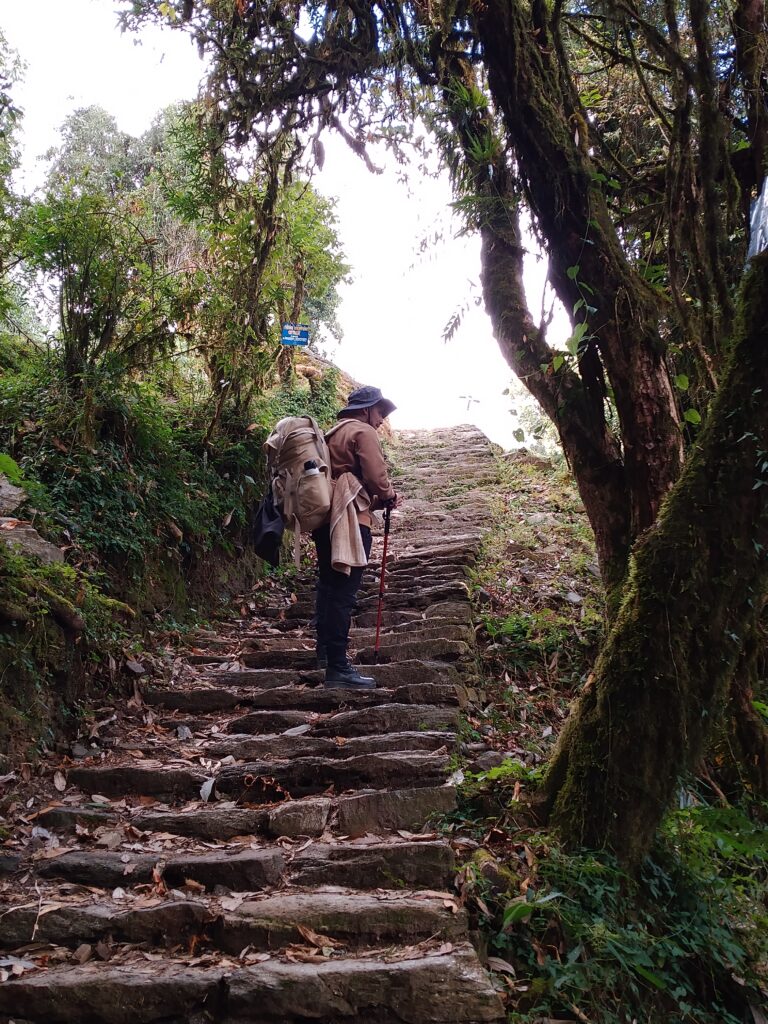
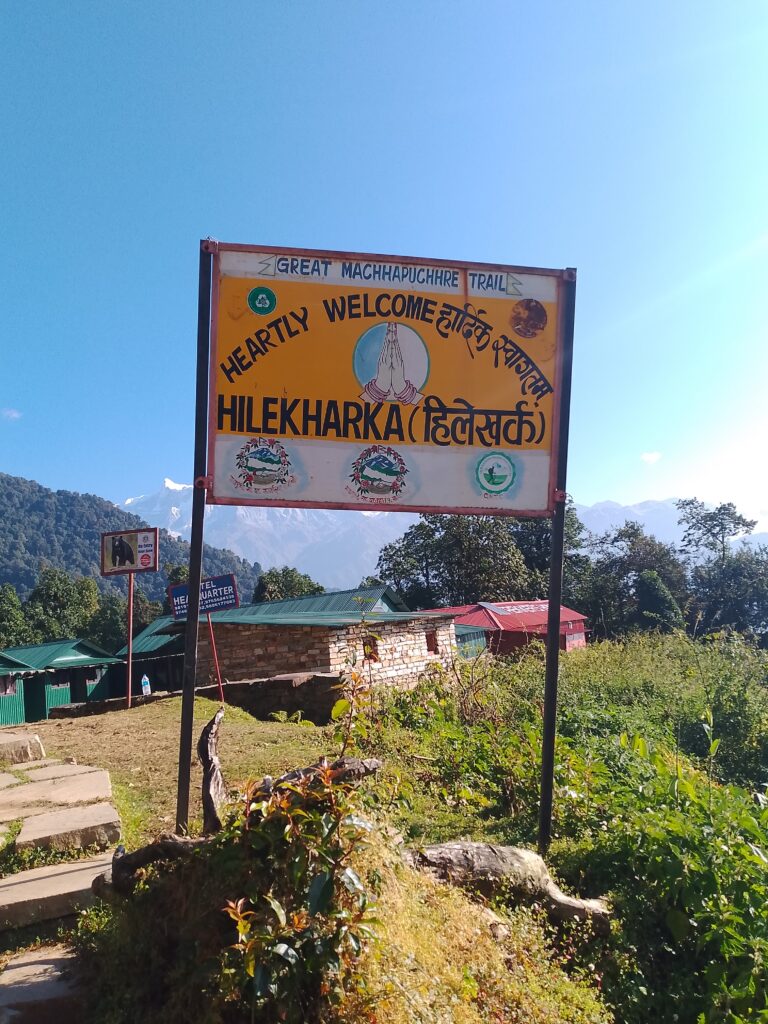
At eleven, we hit Chichemle Kharka. The trail was a two-way stream of triumph and defeat. A Chitwan couple beamed with summit fever: “TikTok made us do it,” the husband grinned. Ten meters off, a mud-caked man slumped against a boulder, sweat-soaked cap askew. I offered my bottle.
“Turned back at the ridge,” he gulped. “Influencers promised three nights, two days, epic views. Forgot the stairs.” He handed it back. “Next time, no believing social media.”
During treks, strangers hand you their stories the way they hand you water without ceremony, trusting you’ll pass it on. Yudish had summited Tilicho a month earlier and still walked like a man testing new legs. Ashutosh was on his first trek ever, eyes wide as a child’s. Pawan had returned after years away, each step a quiet apology to the mountains. Kabindra and Sabita moved like they’d been born on switchbacks; they finished each other’s sentences and shared a single water bottle the way other couples share secrets.
Then came the man carrying his four- or five-year-old daughter. His wife walked beside, grinning at the madness. I asked the obvious. Answer: the girl had already conquered Annapurna Base Camp and Mardi Himal.
We chatted trekking for fifteen minutes until the trail split us. Only then I realized I’d forgotten names.
“What’s your daughter called?” I yelled.
“Yuwancy,” he shouted back, twenty meters downhill.
The name hit like a bell. My Prarthi was six on our trek pointing at every rhododendron, demanding its secrets. Yuwancy carried the same fire, asleep now on her father’s back, ready to ignite.
We hit Rest Camp at one. Twenty starving trekkers swarmed a kitchen stocked for ten. Kabindra and Sabita begged dal bhat; the cook shook his head. “No meat, only ten plates.”
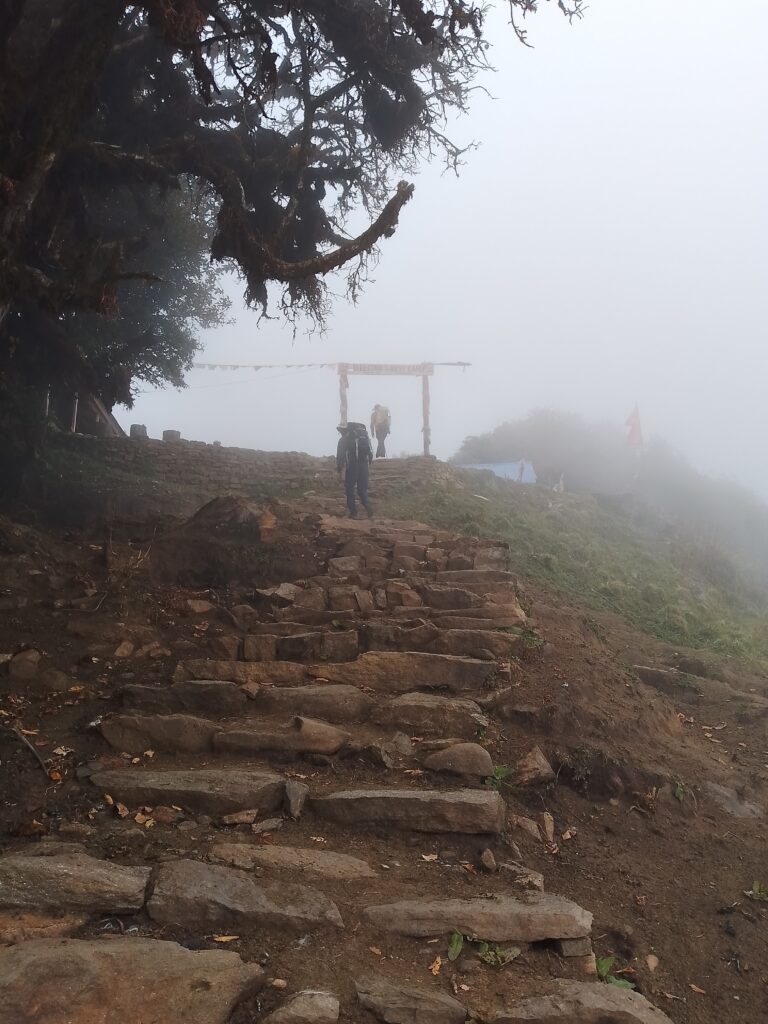
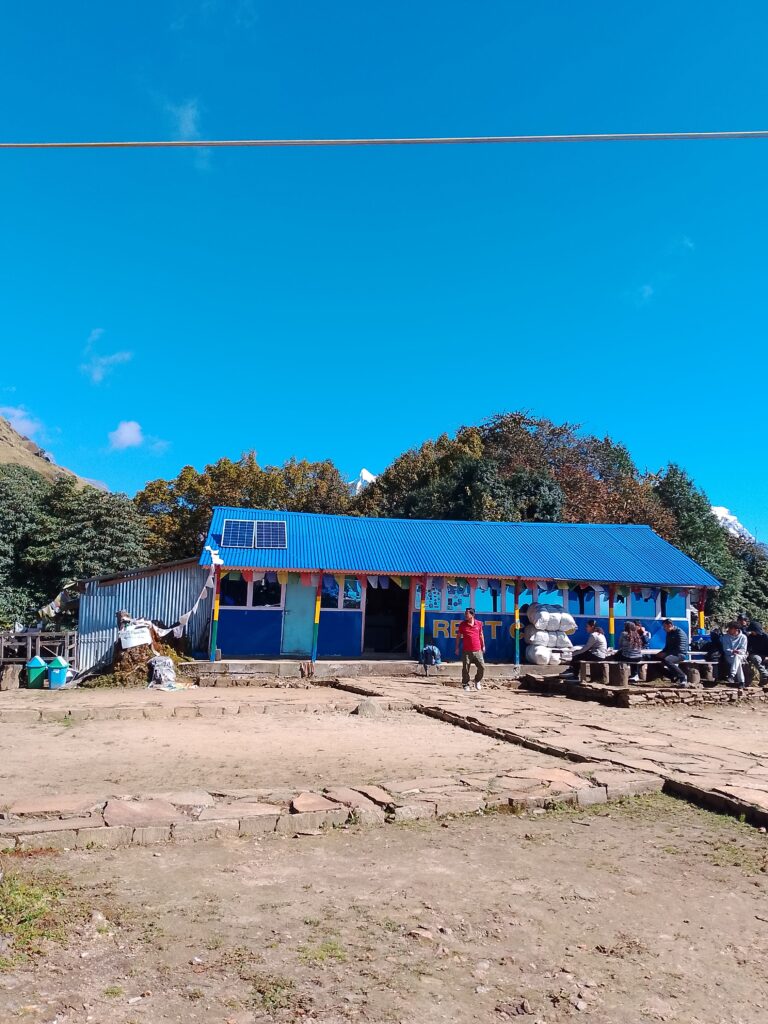
Sabita’s voice carried over the crowd. “Then we split it.”
The owner, sensing opportunity, charged five hundred rupees a head. Ten plates became twenty half portions, and the math worked in his favor. Daylight robbery.
We lost an hour to argument and meal. Packs on, sun gone, mountains cloaked in cloud. Khumai Danda loomed, the trail climbing fierce. By the ridge, six strangers had fused into one sweating, laughing line in thin, bright air.
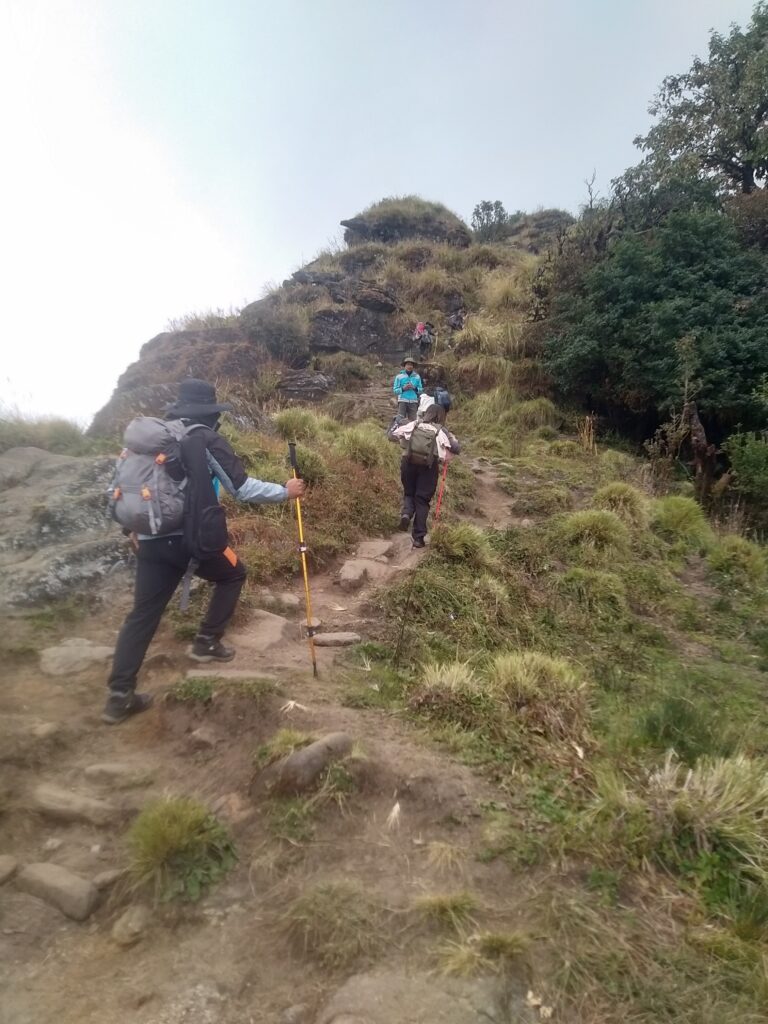
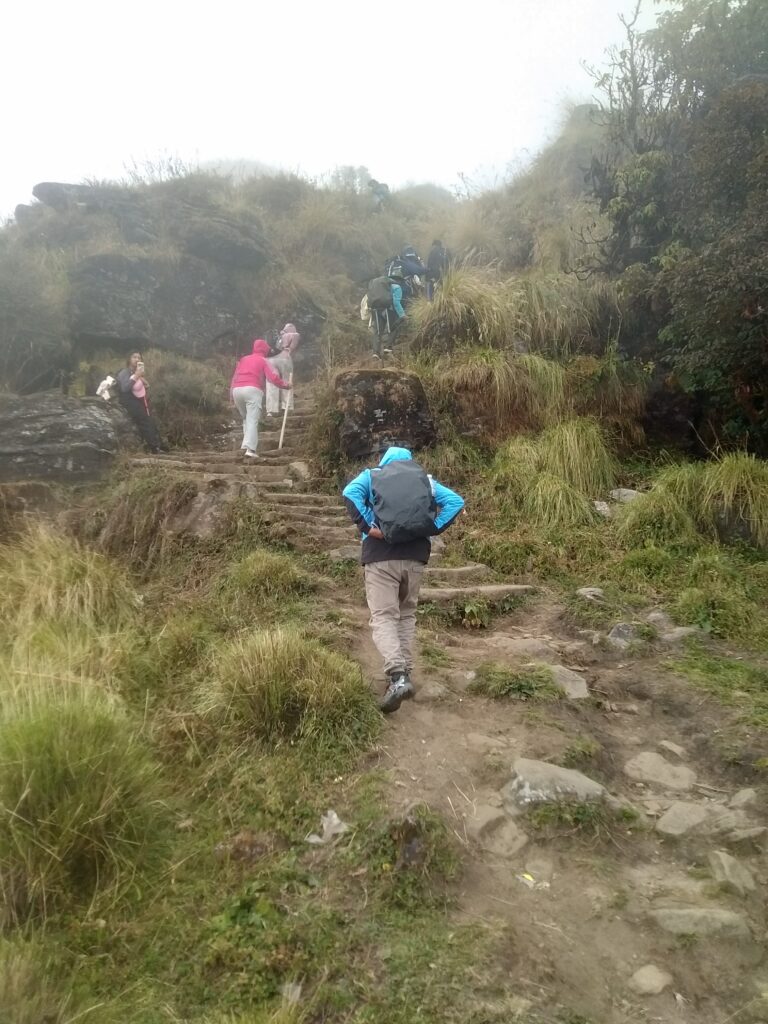
The final push to Khumai Danda felt like climbing into the sky’s attic. The clouds had swallowed the sun, and the steep trail rocky, unforgiving seemed to rise straight into the gray. Each step echoed with the crunch of gravel and the rasp of our breath.
A trekker coming down, face wind burned and eyes wide, blocked our path for a moment. “Huge crowd up there,” he panted, wiping sweat with the sleeve of his jacket.
“How long will it take now to reach Khumai ridge?” The trekkers returning from Khumai Danda were looking at us from below upwards and from above downwards. “If you guys walk in this manner, it will take two hours.”
“If you haven’t booked, forget a room. It’s chaos.” His warning landed like a slap. We exchanged glances; six pairs of eyes suddenly sharp with the same thought.
“Whoever gets up first,” I said, “secures rooms for all of us. No excuses.”
Sabita nodded, already moving. “We already booked one room for us at Hotel 360.”
“I spoke to them yesterday, but didn’t book the room,” I added, matching her stride. “Confirmed at least for all of us.”
Yudish grinned, though his voice was tight. “Then let’s make it happen.”
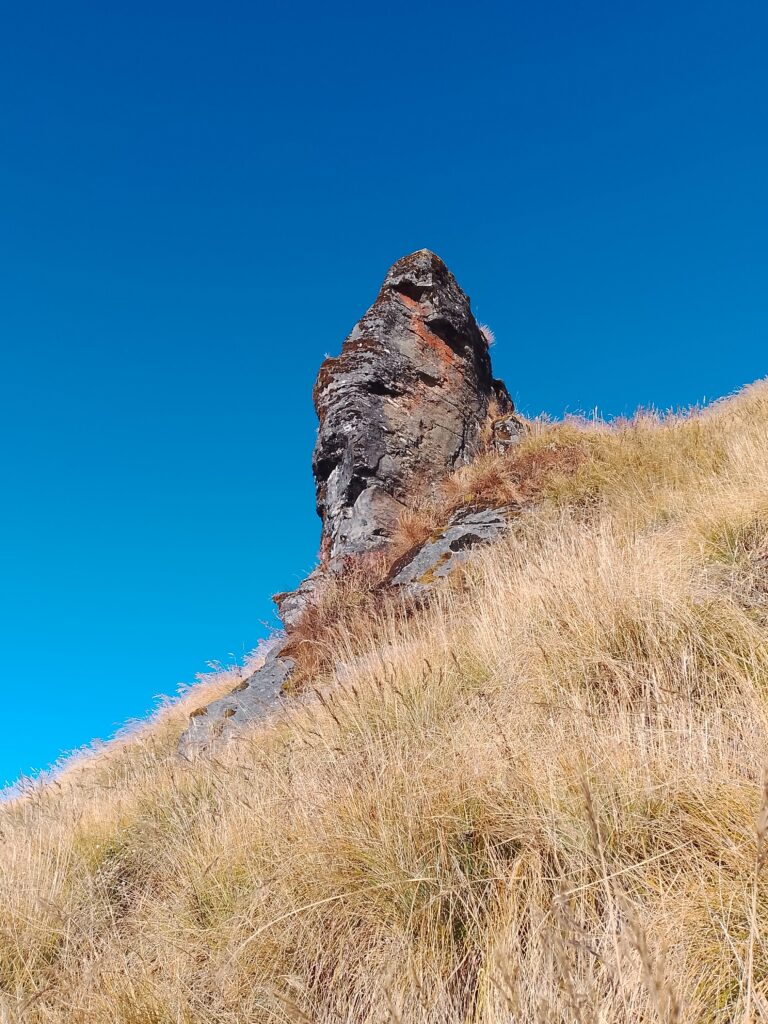
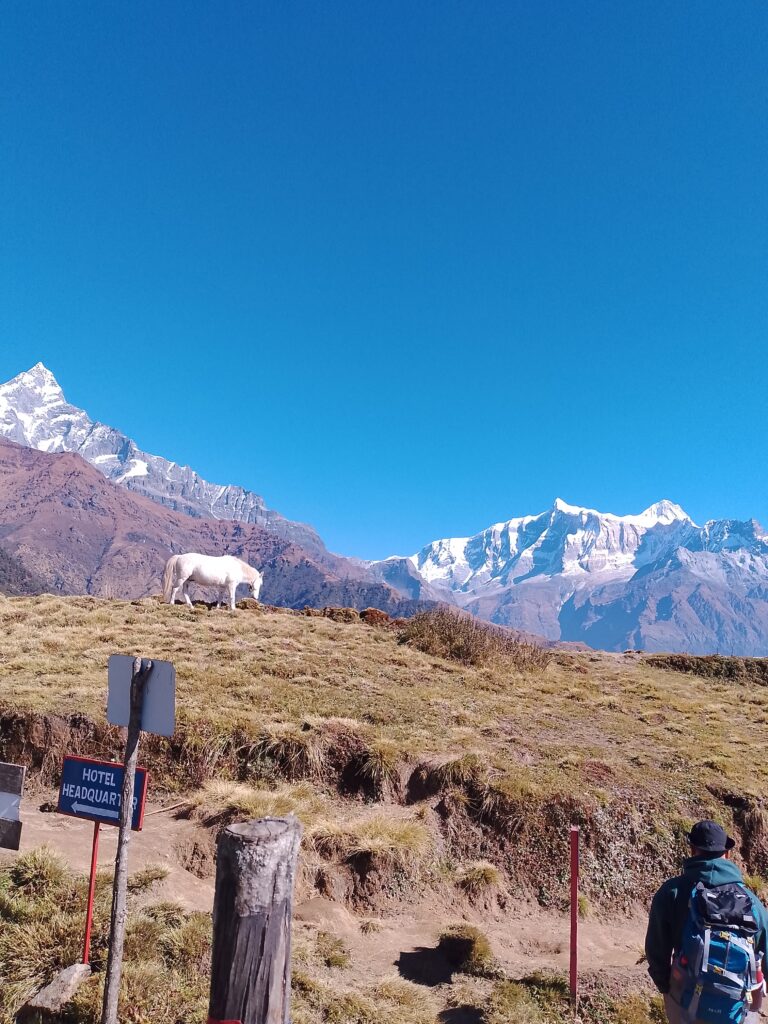
We pushed harder. The air thinned, lungs burned, but the rhythm took over left, right, breathe, repeat. In trekking season the mountains run on scarcity: one teahouse, fifty trekkers, a dozen mattresses, and the eternal truth that even a confirmed booking is only a promise until the key turns in your hand.
Hotel 360 appeared through the mist like a mirage tin roof, Nepal flags snapping, a crowd spilling onto the porch. Despite the huge crowd, Khumai Danda is quiet, as if in meditation. We didn’t see Kabindra and Sabita in this hotel. Maybe they didn’t get any room.
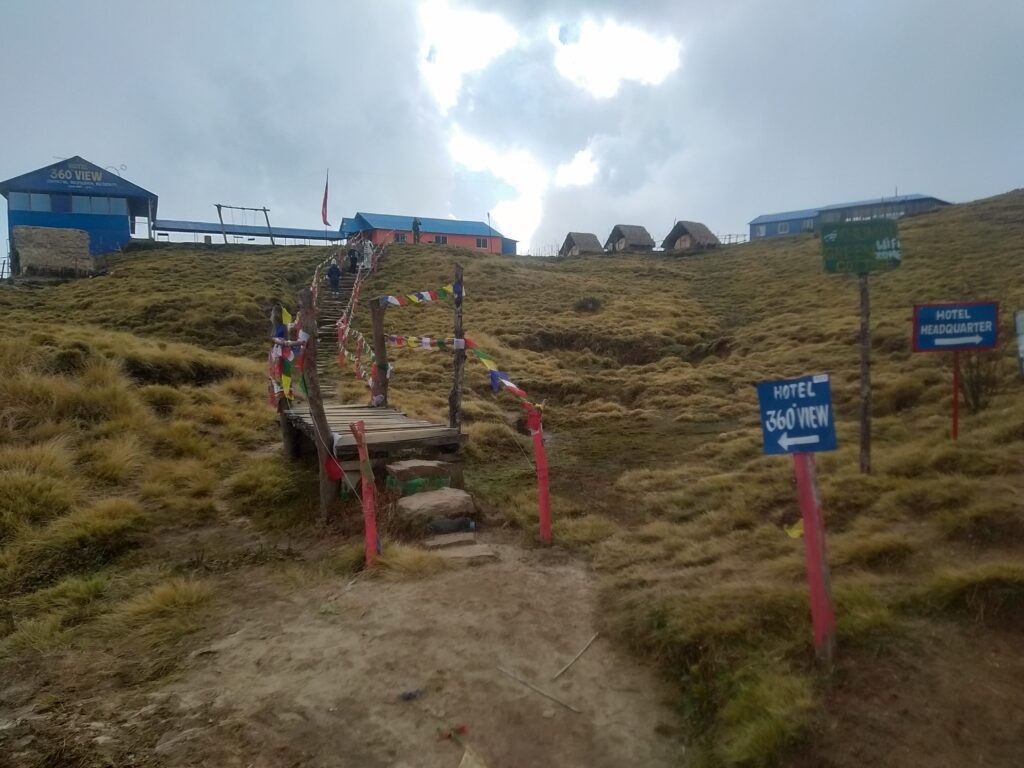
“Dai, need a room for four of us,” I told the owner, breathless but firm.
“What’s your name?”
“My name is Gautam and I talked with Ishwor Sonam yesterday on mobile.”
He flipped through a ledger, frowned, flipped again. “There is no room booked under your name.”
“Call Ishwor Sonam,” and he did, but Ishwor didn’t recognize me.
My stomach dropped. “I called yesterday. You confirmed.”
“Wait, wait let me show you the mobile call logs.”
The owner hesitated, then ready to give the last room. “One room. For four of you. Two thousand each.” It was like we’d won the battle. Four of us in one room.
We didn’t argue about the room. We dropped our packs, claimed our squares, and laughed because we had won barely and because the mountains had taught us long ago that victory up here is measured in square feet of floor and the promise of a dry corner to lay your head.
Outside, the clouds pressed lower, but inside our little rectangle of space, the four of us were home.
It was cold. I brought out whiskey from my bag and served it to all four of us. “Where are they?” Ashutosh asked. The couple Kabindra and Sabita were missing. We didn’t see them. We thought they hadn’t found a room and left for another hotel.
Yudish reminded us, “They don’t have cash. They only had mobile banking, which might not work here on this mountain.”
After having two pegs each, we decided to explore the hotels to see whether we could find them.
“Dai!” Sabita shouted.
I looked in the direction the sound came from. “Where were you guys? We’ve been searching for both of you.”
“I thought maybe you guys wanted to stay separately from us because you need some private space. Hahahah.”
A group of trekkers was singing songs inside the dining area. We hurried to enter the dining area. A few songs were sung by the heroes of the trek. Trekkers enjoyed hot coffee or rum.
“Let’s have rum, dai?” Yudish asked me, and Ashutosh pressured me. I gave the green signal, and then Ashutosh poured rum for the three of us.
“Let’s ask for dinner, because we need to wake up at 3 o’clock tomorrow morning,” Kabindra reminded.
We had a vegetarian dinner and got inside the room and slept.
Someone knocked on our door and someone knocked on our window.
“It’s time to go now,” Kabindra shouted from outside our room.
“Wait, wait give us five minutes,” Pawan answered.
At 4 a.m., when the world still dreams in ink, we lace our boots and step into the void, flashlights carving narrow tunnels of light through the Himalayan night.
In the dark, the trail is rumor. Headlamps flicker like altitude drunk fireflies, each a silent prayer. We chase strangers’ light, trusting shared hunger over maps. “He who climbs highest laughs at tragedy.” Here, tragedy fades; only being unfolds.
Pawan couldn’t walk but craved Korchan Danda’s sunrise. I sprinted fifteen minutes for Ashutosh’s hotel keys, raced back. “Sorry, brother,” Pawan said. “We’ve come forty minutes from Khumai let’s greet the sun at the top.”
Two hours of uphill hell lungs fire, thighs revolt until the ridge delivers judgment. We stagger onto Korchan Danda, breathless silhouettes against bruised sky. Sun delays. Mountains speak ancient stone faces, eternal patience, time a circle, dawn the universe waking.
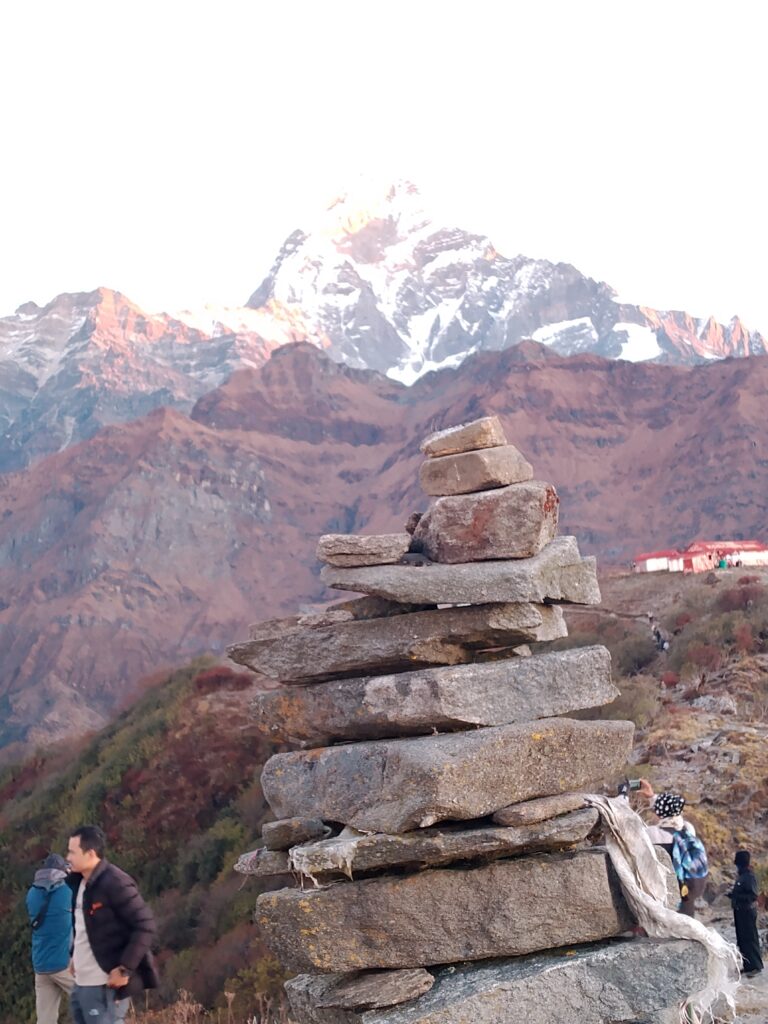
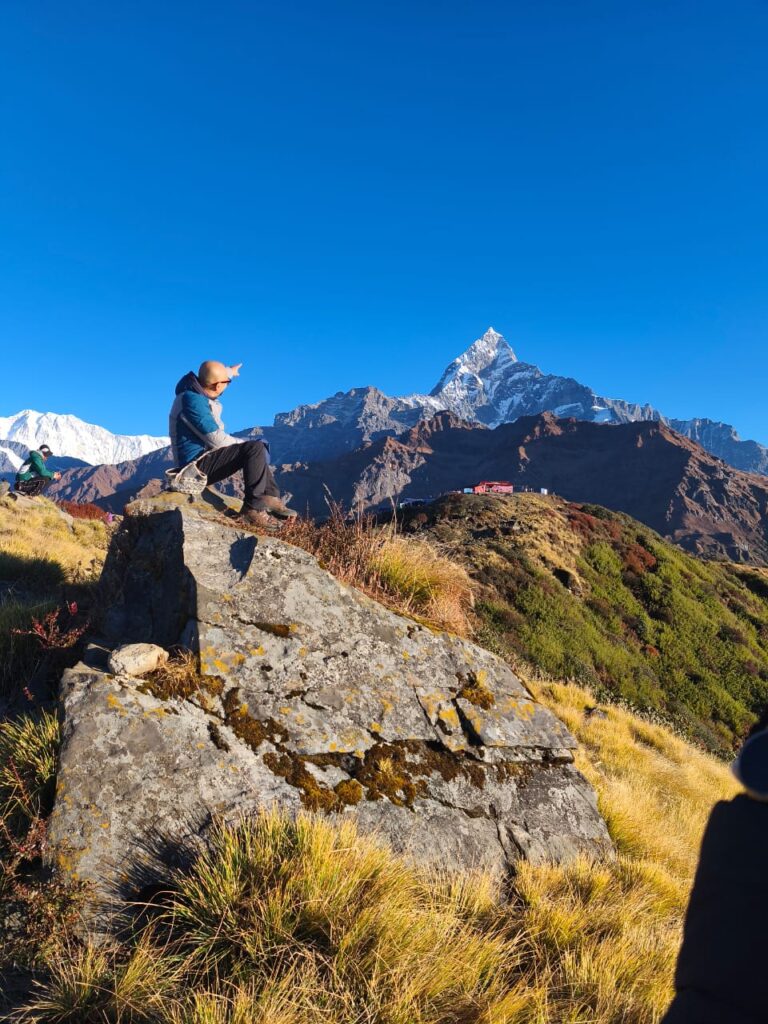
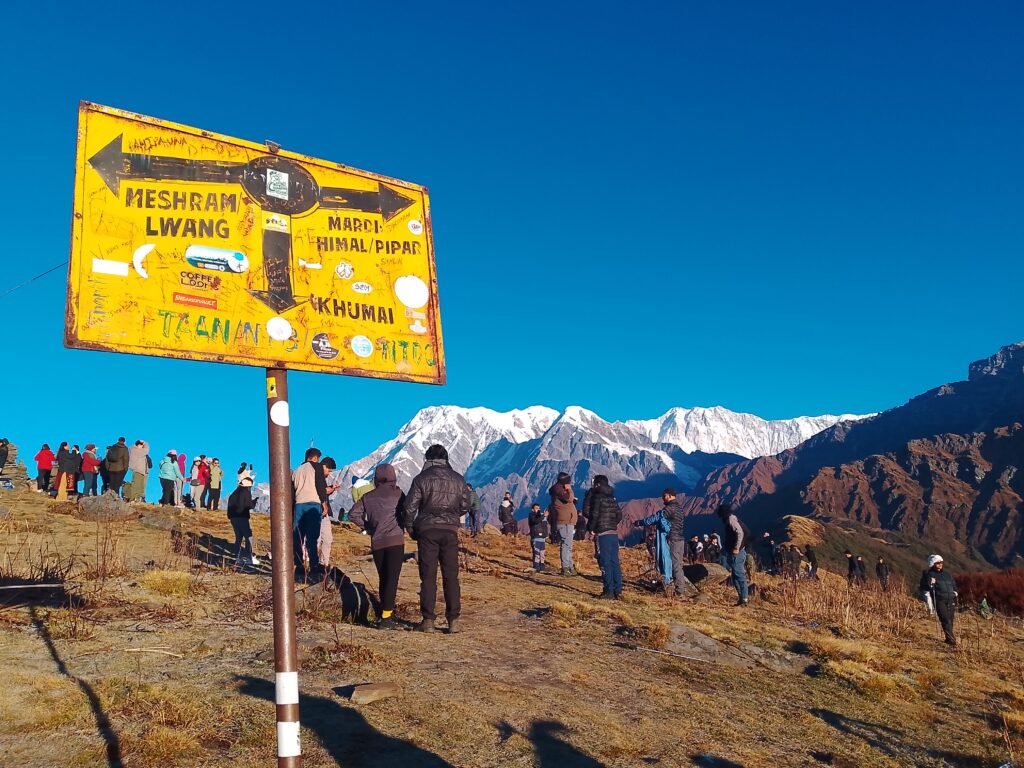
Then, a gold blade slashes the horizon. Sun rises gently, childlike. Machapuchhre blushes rose, shy spire intimate. Annapurna spreads radiant glaciers, maternal. Strangers turned tribe applaud the light, the peaks, and the miracle of witnessing.
Why here? What lasts? One shaft on stone answers. Mountains are the reply. We, fleeting, clap like kids discovering beauty.
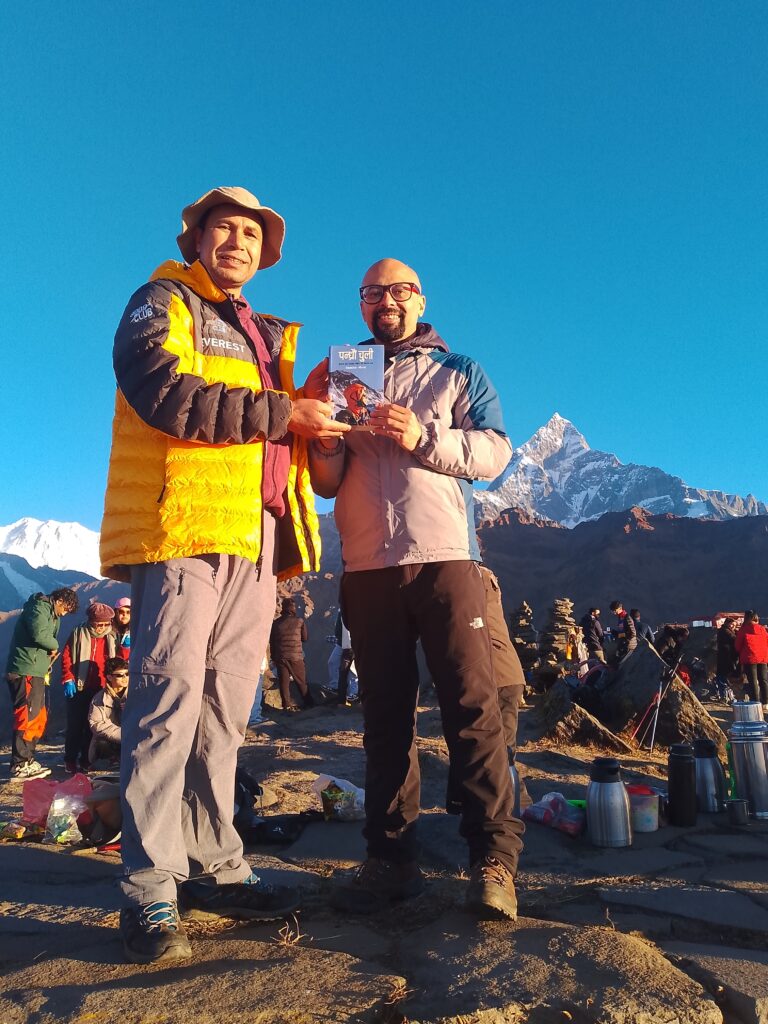
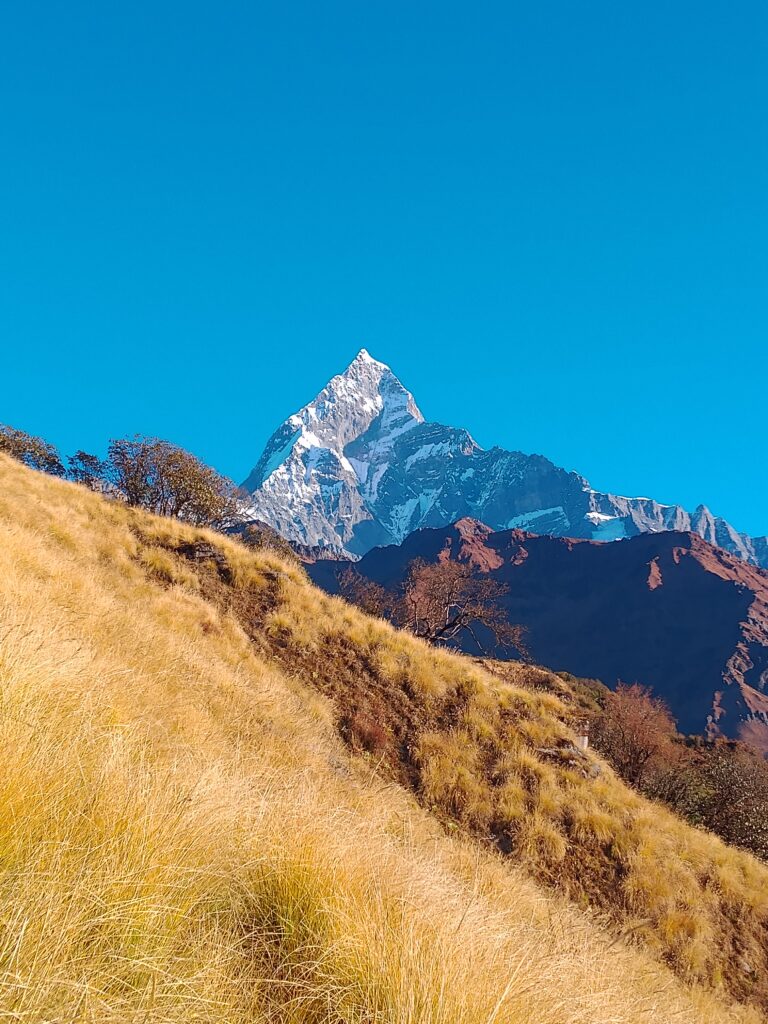
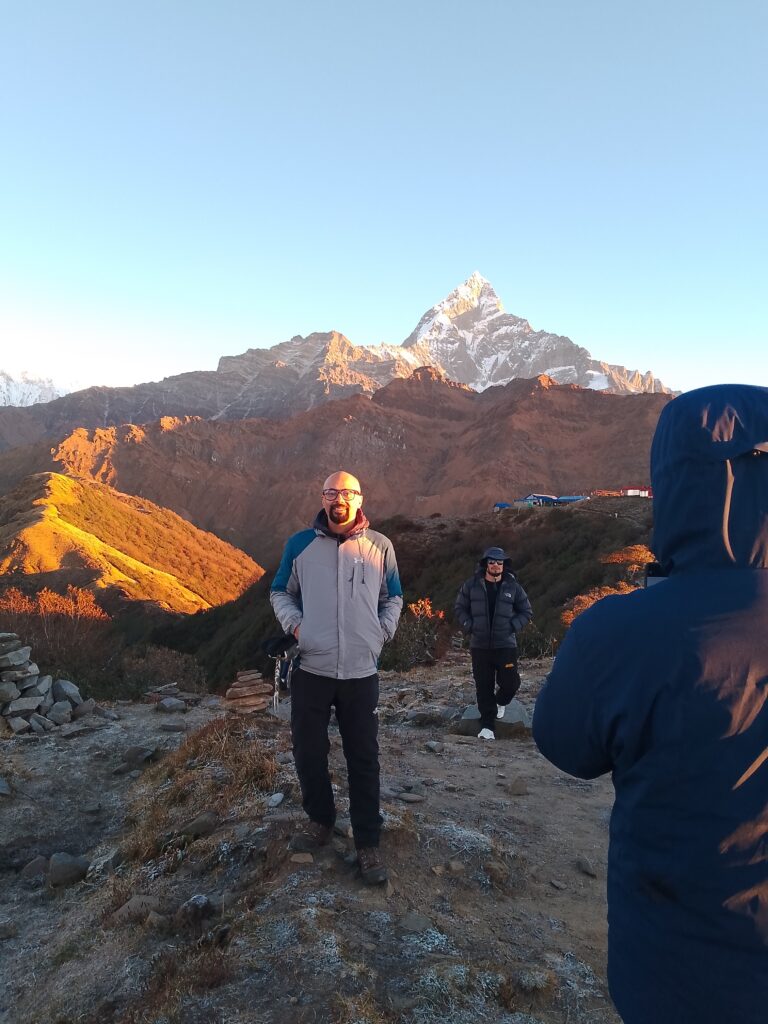
“Brother, please give us tea,” I requested the person selling tea and coffee.
All of us gathered together and had tea and the snacks we had brought in our bags. We clicked lots of pictures. Kabindra was busy taking his girlfriend’s photos.
I asked Kabindra to take mine too. He agreed but was surprised when I took off my top and stood half naked.
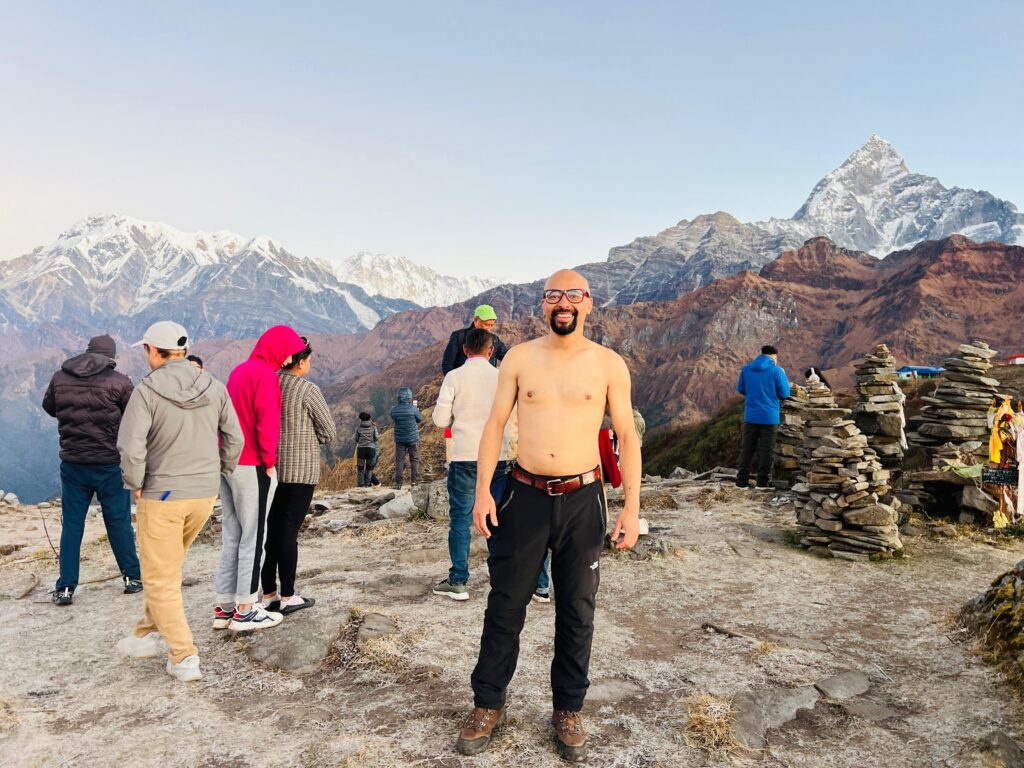
“Dai, take off your pants too. Let’s have a photo in just boxers.”
Pawan told them that naked photos had already been taken during the Mardi Himal Trek.
With the Himalayas all around, we captured the feeling, the memories, and the moment with nature. At 3,700 meters, we saved a beautiful piece of life.
It’s freezing, but I still strip off my top and strike my signature pose on Korchan Danda’s summit half naked, grinning, sunrise blazing behind me. One glorious hour up there, then we’re sliding back down to Khumai Danda in another hour.
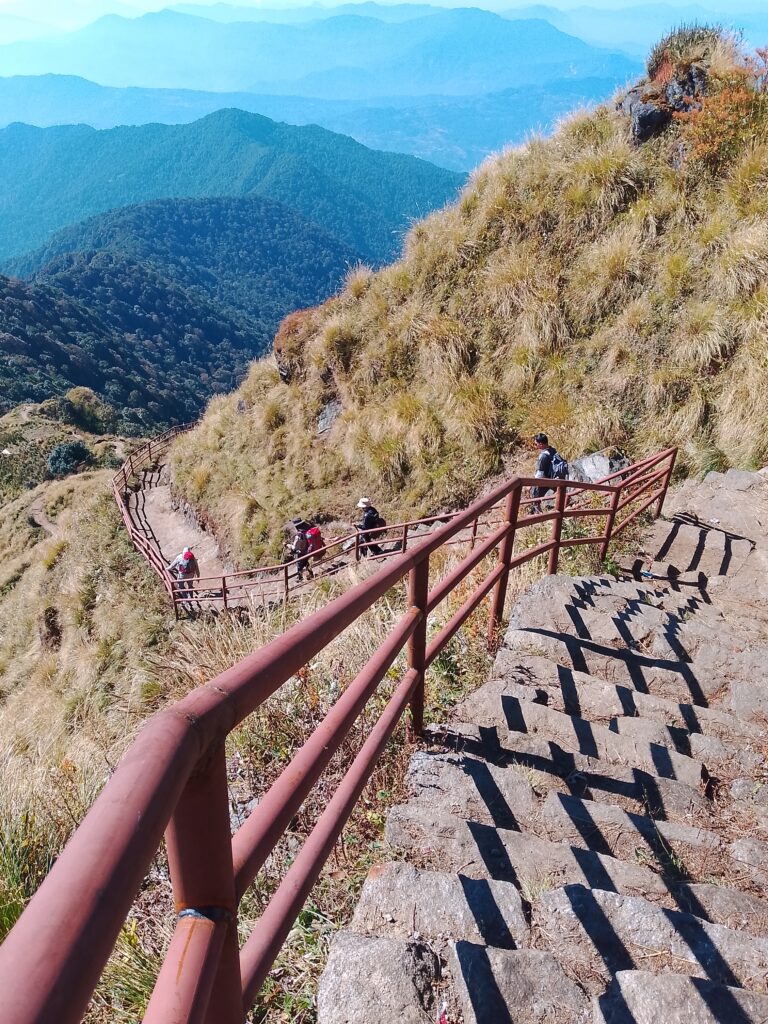
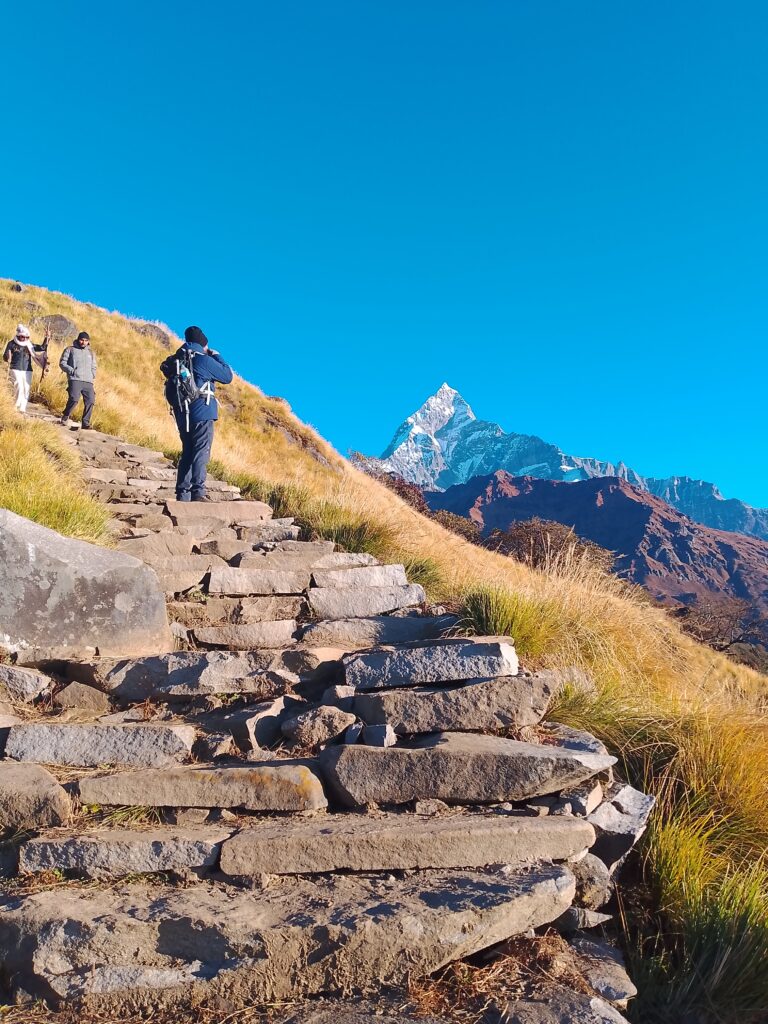
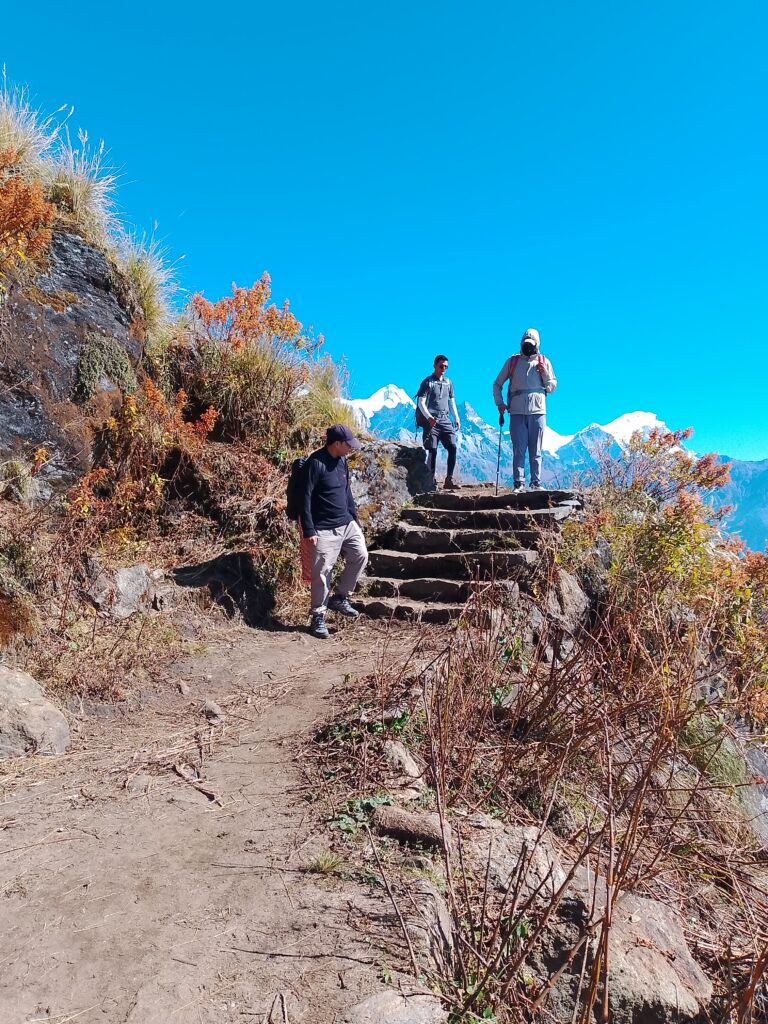
Breakfast is a slow motion affair one lone cook flipping eggs like he’s got all week. We finally eat, settle the bill, and the hotel owner drapes khadas around our necks. I tell the crew, “This isn’t a farewell scarf; it’s a receipt. Wear it and you’re officially paid up Nepali Excel sheet.”
Saripakha to Khumai is a brutal eight to nine hour stairmaster from hell. Khumai to Korchan? A gentle uphill stroll by comparison.
“Let’s do lunch in Pokhara tandoori, the works!” Unanimous yes.
On the descent we pass fresh faced trekkers heading up. Some look crushed when we break the news: “You’re still hours from Khumai, and Korchan’s another world.” We dish out honest trail intel no sugarcoating.
A lively group from Dharan is parked on a rock, sharing snacks. I ask, “What dragged you all the way from Dharan?”
A silver haired beauty smiles. “TikTok videos. Couldn’t resist.”
Another asks, “How much farther to Khumai?”
“You’ll hit it around five p.m.”
“That far?!”
I grin. “I was in Dharan long time back, gorgeous place, and that sukuti? Unreal.”
From behind me an old guy chimes in, “Not just the place and the meat, brother the girls are stunning too. Look at these ladies right here!”
We all crack up, the mountains echoing our laughter all the way down.
Kabindra called a jeep from Saripakha. After one hour, we reached Harichowk. From there, we took two taxis to Pokhara.
Yudish said, “I’m starving no meat for days. I want a full chicken tandoori and chilled beer!” We ordered tandoori, butter naan, chicken curry, and chilled beers.
The waiter came back. “Sorry, no tandoori and chicken curry.”
We moved to the restaurant across the street and ordered the same. They said yes, but tandoori would take time. We opened beers and ate the free snacks.
“Cheers! To The Mountain”
The naan and curry came. We ate fast and happily. But the tandoori was still not ready. It was 6 p.m., and I had to catch a bus to Kathmandu.
Pawan said, “Cancel the tandoori!” We left, got into a Scorpio, and drove to Kathmandu.
The trek was fun chatting with new friends, laughing over sore feet. But that night, I was too tired to talk. Phone at 5 %, I switched it off.
1 AM.
Scorpio stopped at Kalanki. Dark and quiet. We quickly took two bikes to go home. Ten minutes later, my bike got a flat tire.
“Dai, punctured!”
“Now what?”
“Dai, stay right here. I’ll grab another bike. Don’t move till I’m back.”
He left.
Midnight. Alone.
Every sound scared me rustling leaves, barking dogs. The road was empty. I tried Pathao and InDrive. No one accepted.
After 15 minutes, one Pathao took my ride but raised the price from 135 to 350 rupees. I paid. Just wanted to reach home safe.
Finally, home. Charged phone. Slept.

That’s a lovely description of Pokhara – the comparison to a lover turning over is quite evocative.